
Every service business runs on conversations — discovery calls, kickoffs, check-ins, the twenty-minute phone call that quietly changed the project's scope. And in most businesses, the only place those conversations survive is in the memory of whoever was on the call, decaying at the speed of a busy week. The write-up was always the fix, and nobody has ever had time to do it.
Quick answer: Record the meeting, let AI draft the write-up — summary, decisions, action items — then spend two minutes reviewing instead of twenty transcribing. The discipline that makes it work: every action item becomes a dated task on the customer's record, and the draft is always reviewed by the human who was in the room before anything acts on it.
The most expensive thing about a meeting is forgetting it
The meeting itself costs an hour. Forgetting it costs more: the scope change nobody wrote down becomes next month's billing dispute; the "I'll send you those numbers" promise becomes the follow-up that never happened; the client's offhand mention of a fall project becomes revenue someone else wins. A conversation that isn't captured doesn't just fade — it silently converts into risk.
The old answers all fail the same way. Typing during the call splits your attention exactly when listening matters most. Writing it up after depends on the calendar's least defended slot — "right after the meeting" — which the next meeting eats. So write-ups happen for the first week of any new resolution, then stop, and the business goes back to running on recollection.
Let the meeting write itself up — then read it
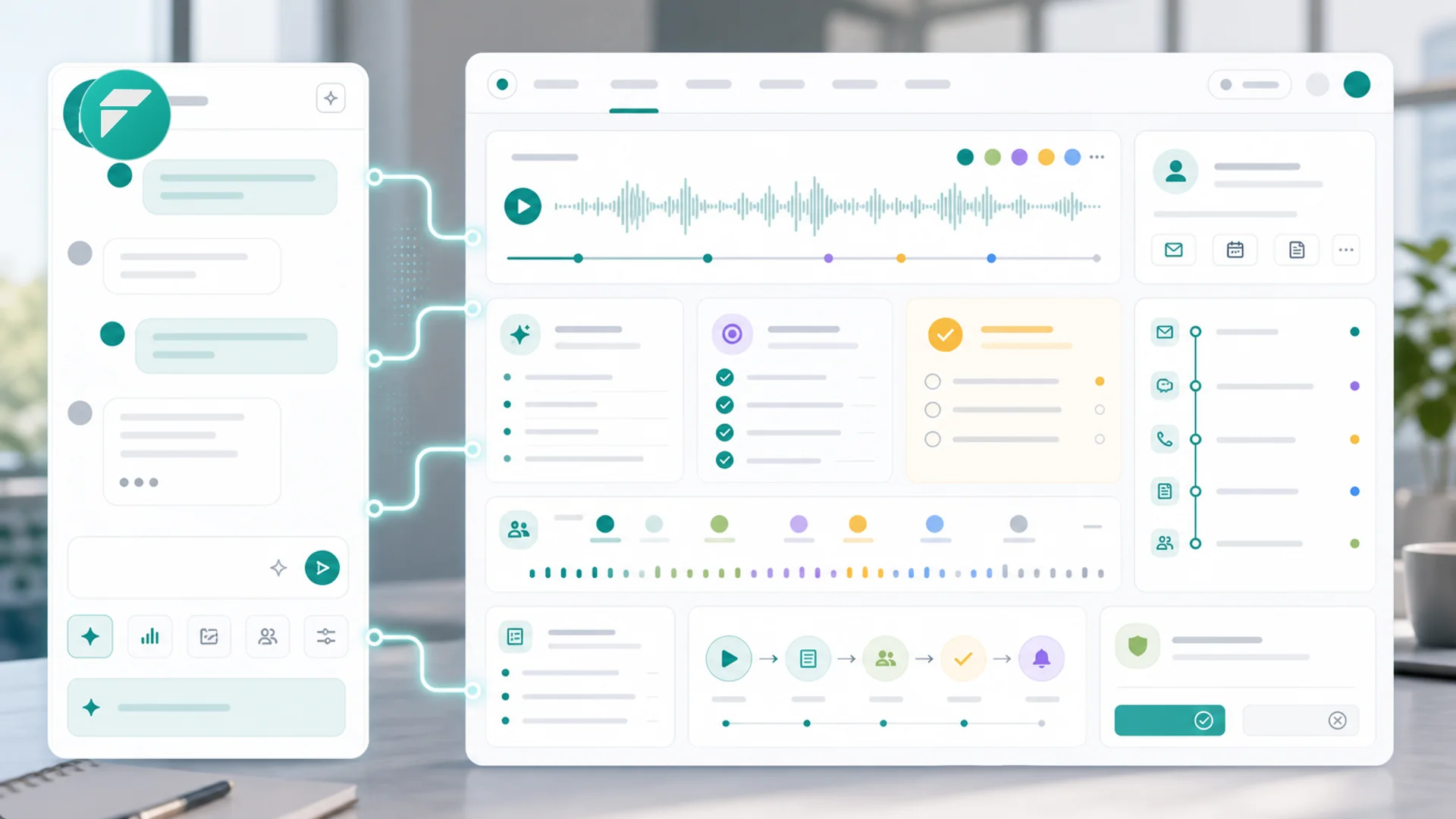
This is the shape of AI assistance that actually sticks: the machine does the part that was never a good use of a human — turning ninety minutes of audio into a page — and the human does the part that was always the point. When you record and review meetings, the meeting produces a draft write-up: what was discussed, what was decided, who owes what. Your job shrinks to a two-minute read.
That review is not a formality, and the habit dies if you treat it as one. You were in the room; the AI wasn't — it heard the words, but you know that "let's think about the bigger package" was polite deferral, not interest. Reviewing the AI-prepared draft means checking the three things that carry consequences: the decisions (did it capture what was actually agreed?), the numbers (amounts, dates, quantities — transcription's classic stumbles), and the tone of anything sensitive. Fix what's wrong, cut what's noise, and then let it become the record. Two minutes of human judgment on top of machine diligence beats either alone — the same review-before-it-counts discipline we've urged for AI-drafted content.
Notes are storage. Tasks are motion.
Here's where most note-taking systems — human and AI alike — quietly fail: they produce an accurate record that nothing ever reads again. The write-up's real cargo is its action items, and action items only matter if they land somewhere that nags:
- Every "we'll send / we'll fix / we'll check" becomes a dated task on the customer's record — a task with an owner and a date, not a bullet in a document. The intake rule applies verbatim: an assignment, not an announcement.
- The summary lands on the customer's timeline, next to their emails, quotes, and invoices — so the next person who opens the record reads what was said in the room, not just what was typed afterward. It's the same one-timeline argument as connecting your inbox: the conversation files under the person it belongs to.
- Client-facing promises become follow-up with dates attached. "You'll have the revised quote by Thursday" said aloud is now a Thursday deadline the system remembers — which is how meetings stop generating the quiet-deal problem your pipeline sweep exists to catch.
The test of a meeting system isn't the quality of its notes. It's whether anything different happens on Thursday.
The compounding part: meetings become memory
One written-up meeting is a convenience. A year of them is an asset that changes how the business runs:
- Handoffs include the conversations. A new team member covering a client inherits not just files and invoices but what was actually said in six months of check-ins — the context that used to live exclusively in your head and leave the building with your vacation.
- Disputes meet receipts. "You agreed to X in the March call" is checkable, calmly, by either side. Most scope arguments aren't bad faith; they're two honest memories diverging — a written record dissolves them before they harden.
- Patterns surface. When the last four check-ins with one client all contain a flavor of the same complaint, that's the pattern-not-incident signal — visible only because the meetings exist somewhere a human can reread them.
Keeping it honest: three boundaries
- Consent first, always. Recording a client call is a relationship decision before it's a productivity one. Say it plainly at the top — "I record these so I can be present instead of typing; you'll get the summary" — and most clients hear it as service. The summary-sharing makes it true.
- Review is non-negotiable. An unreviewed AI write-up entering your records is how one mishearing becomes institutional fact. The two minutes are the system; skipping them isn't a shortcut, it's a different (worse) system.
- Not every meeting deserves the machinery. Client conversations with decisions and promises — yes. The internal fifteen-minute sync that produced one task — just create the task. The point is never coverage; it's that nothing with consequences evaporates.
Key takeaways
- Unwritten meetings convert into risk: scope changes become billing disputes, promises become missed follow-ups, and hints of future work become someone else's revenue.
- AI does the transcribing, you do the judging: the machine turns ninety minutes into a page; your two-minute review checks decisions, numbers, and tone — the parts that carry consequences.
- Notes are storage, tasks are motion: every action item becomes a dated, owned task on the customer record — the test of the system is whether Thursday goes differently.
- File conversations under people: summaries land on the customer timeline beside emails and invoices, so the record briefs whoever acts next.
- A year of write-ups is an asset: handoffs inherit the conversations, disputes meet receipts, and repeat complaints surface as patterns while they're cheap.
- Three boundaries keep it honest: announce the recording, never skip the review, and don't aim the machinery at meetings that produce one task.
Frequently asked questions
Will clients be put off by recorded calls?
Framed as service, the opposite happens: "I record these so I can be fully present, and you'll get the summary afterward" tells the client they won't have to take notes either. The summary you send is the proof — it arrives, it's accurate, and it lists what each side owes. The clients who appreciate that most are exactly the organized ones you want more of. The non-negotiable is asking first, every time, and honoring a no without friction.
How accurate are the AI write-ups, really?
Good enough to draft, not good enough to file unread — which is the right division of labor. Expect the summary to be solid on flow and topics, and treat numbers, names, and dates as the review's checklist. The realistic comparison isn't AI-notes versus perfect-notes; it's AI-notes-plus-two-minute-review versus the write-up that was never going to happen at all.
What should actually go on the customer record from each meeting?
Three things: the summary (what was discussed and decided), the tasks (every commitment, dated and owned), and any change to the engagement's facts — new scope, new budget, new timeline — corrected in the places those facts live, like the quote or the recurring invoice. What shouldn't go in: the raw transcript as the record of note. Nobody rereads transcripts; people reread summaries.
Where's the line between this and the AI just running my client relationships?
The line is decision-making. The AI hears, drafts, and reminds; it doesn't decide what was agreed, doesn't send the follow-up unreviewed, and doesn't talk to your client without you. That's the same review-gate we recommend for every AI workstream: machine diligence, human judgment, in that order. A meeting system that skips the human is just a faster way to be confidently wrong about what your client meant.
Ready to stop choosing between listening and remembering? Faster records your meetings, drafts the write-up, and turns action items into dated tasks on the customer record — with you reviewing before anything counts. Start free and let the next meeting write itself up.