
Quick answer: Photographers don't have a steady year — they have seasons, and the pros choreograph them instead of riding them. Map your year as four products, run mini-session days as slot-based booking events with deposits, open booking windows with past-client early access, deliver galleries as a gated product moment with honest expiry, and put every client on a same-time-next-year rhythm. The off-season isn't dead time; it's when the business gets built.
Photography income is seasonal by physics: golden light, wedding weather, holiday cards. Most photographers ride the wave — slammed from September to December, anxious from January to March. The ones who thrive do something different: they choreograph the year, turning each season into a designed product with its own booking window, and the off-season into the quarter where the business itself gets built.
We covered the photographer's portfolio site already — this is the operating calendar behind it.
The year as four products
Stop selling "photography" and start selling the season's product. A typical family-and-portrait year:
Blossom minis, graduation portraits — the volume product (mechanics below).
Weddings and events — high-ticket, booked far ahead, deposit-anchored.
The foliage rush — full sessions at full price, plus a second mini-day for the card-photo crowd.
Holiday card deadlines, then January–February as the business quarter: albums, portfolio, pricing, marketing.
Your map will differ — newborn photographers and brand photographers have different seasons — but the principle holds: every season gets a named product, a price, and a booking window. "Booking now: Fall Family Sessions" sells; "I'm a photographer, contact me" waits.
Mini-sessions: the day that earns like a week
The mini-session is photography's best-kept economics: one location, one setup, one golden afternoon — sliced into 20–30 minute slots, booked back-to-back. Ten minis at a third of your full-session price out-earn two full sessions, with one drive, one setup, and one batch edit.
Mechanically, a mini day is a slot-based booking page: the date's slots visible, each one bookable with a deposit or full payment at booking (minis no-show brutally without one), reminders automatic, and the availability grid enforcing the buffer between slots that keeps you on schedule when the toddler in slot three needs five extra minutes. A sold-out mini day is also marketing: "Spring minis sold out in 48 hours — join the waitlist for fall" is the most credible ad a photographer can run.
Booking windows make the season real
Always-open booking produces always-postponed decisions. The choreographed year opens each season on a date, announced ahead: the email two weeks out, the social drumbeat, then doors open. Two refinements do most of the work:
- Past clients book first. A 48-hour early-access window for previous clients rewards loyalty, fills half the calendar before the public sees it, and turns your client list into the asset it should be. (It's the venue owner's prime-date waitlist in reverse.)
- Scarcity stays honest. Real dates, real slot counts, windows that actually close — the same deadline integrity that fills any event. One season of kept windows trains your market to book when doors open.
The gallery is a product moment, not a file transfer
Delivery is where most photographers leak both delight and revenue. The upgrade: each client's gallery lives as a gated, member-access page on your own site — their images, their login, your brand around it — rather than a third-party link that expires into spam.
- Stage the reveal. A "your gallery is ready" email with one hero image lands like an event; a WeTransfer link lands like homework.
- Expiry, honestly. A gallery open for 30 days (then archived, retrievable on request) converts browsing into ordering — the print and album decisions happen while the excitement is alive, not someday.
- The upsell lives here. Wall art, albums, and holiday cards sell at gallery-reveal energy. Even a simple "favorites for your album" ask inside the gallery window outperforms any later email.
The same-time-next-year rhythm
A family that loved this year's fall session is next year's easiest booking — if anyone remembers to ask. Put the rhythm on rails: the post-session follow-up (thank-you, review ask, referral nudge at the gallery-reveal peak — the peak-moment ask in its purest form), then the eleven-month note: "fall sessions open to past clients on August 1." Per client it's a calendar entry; across a client base it's the difference between rebuilding demand every season and rolling it forward.
The off-season is the business season
January and February are when the choreography for the whole year gets set: the portfolio re-curation (this year's best nine in, last year's weakest out), the price review (a standing waitlist is your answer), the year's booking-window calendar drafted and the announcement emails written in one batch, and album production cleared before spring. The photographers who feel calm in October did this in February.
Key takeaways
- Choreograph, don't ride: every season gets a named product, a price, and a booking window.
- Mini-days are the volume engine: one setup, slot-based booking, deposits against no-shows — a day that earns like a week.
- Windows over always-open: announced opens, past-client early access, and scarcity that stays honest.
- Galleries are gated product moments: staged reveal, honest expiry, and the upsell at peak excitement.
- Same time next year: the eleven-month note rolls demand forward instead of rebuilding it.
- February builds October: portfolio, prices, and the year's windows get set in the quiet months.
Frequently asked questions
How should I price minis relative to full sessions?
Roughly a quarter to a third of the full-session price for a quarter of the time — the point is volume and accessibility, not a discount on your real work. Keep the deliverable visibly smaller (fewer images, one outfit, one location) so minis feed full sessions instead of cannibalizing them.
Full payment or deposit for mini slots?
Full payment at booking, for minis specifically — the price point is low enough, and a no-show on a 10-slot day is a 10% revenue hole you can't refill. Full sessions and weddings take deposits with balance schedules instead.
What if a booking window opens and nothing sells?
Diagnose in order: did the announcement runway exist (two weeks of drumbeat, not a day-of post)? Did past clients get early access? Is the product named and priced clearly? A quiet window is almost always a quiet runway — the fix is marketing rhythm, not a discount.
Galleries expiring feels harsh — won't clients push back?
State it warmly and offer the archive: "your gallery is open for 30 days; after that we tuck it into the archive — just ask and we'll reopen it." Almost nobody objects, ordering happens while it matters, and you've kept the courtesy without keeping the deadline-less drift.
I shoot weddings, not families — does the year still apply?
The shape shifts but the choreography holds: engagement-season booking windows (post-holiday January!), anniversary sessions as the recurrence product, albums as the off-season revenue, and minis swapped for styled-shoot content days that feed next year's bookings.
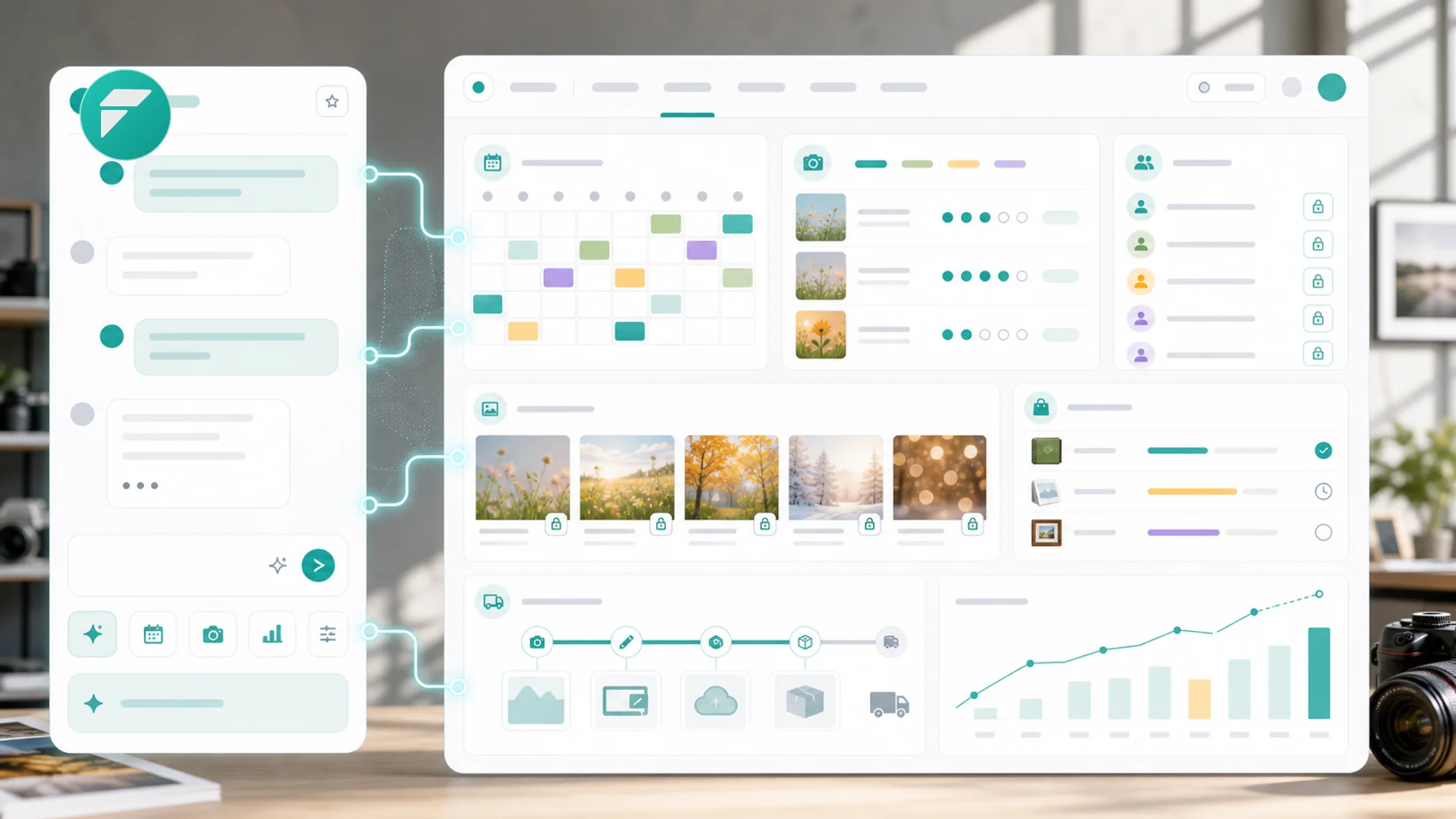
Booking pages, slot grids, deposits, gated galleries, follow-up journeys, and the client list all run in one Faster workspace. Draft your four-season map this week, pick the first window's open date — and let next October be the calm one.