
Quick answer: Newsletters get opened when they keep a promise on a rhythm: a one-line reason to subscribe, subject lines that say what's inside, a cadence you can hold on your worst week, subscription groups that let tired readers choose less instead of leaving, a reusable template that makes the habit cheap, and a post-send review that reads business outcomes — not just opens — before deciding what to change.
Most newsletters die of politeness. They're sent because it's the first of the month, written because they're due, opened by almost nobody, and quietly resented by sender and receiver alike. Then there's the other kind — the one readers actually watch for — and the difference between the two is not writing talent. It's structure: a promise, a rhythm, and a feedback loop.
This is the newsletter-specific layer on top of our email marketing guide: how to earn the open, every issue.
A newsletter is a promise, not a channel
Before subject lines or send times, answer the only question subscribers ever ask: what do I get, every time? "Our monthly newsletter" is not an answer. "One practical pricing tip and the best thing we built this month, in three minutes" is — and everything else in this post gets easier once it exists.
Write that promise on the signup form, then keep it with the discipline of a publication. A kept promise trains the open reflex; a newsletter that's secretly a promotions channel in a cardigan trains the archive reflex. (If you have real promotional needs — you do — that's what separate sends and segments are for, not the newsletter's body.)
Subject lines: say what's inside
The curiosity-gap era poisoned the well — readers have been "You won't BELIEVE this"-ed into permanent suspicion. What survives is the opposite move: front-load the value and tell the truth.
"Our June Newsletter Is Here! 🎉" · "You won't want to miss this..." · "Big news inside!"
The first describes the container, not the contents. The other two write checks the contents can't cash — each over-promise spends trust the next issue needs.
"The pricing mistake we see every week (and the 10-minute fix)" · "What changed in your booking page this month" · "3 client questions we answered in May"
Each one is the issue's best item, stated plainly, specific enough to picture. The test: would you open it from a stranger? Then use the preview text as the second line of the pitch — the next-best item — instead of letting "View this email in your browser" squat there.
And send from a person. "Maya from Riverside Yoga" out-opens "Riverside Yoga Newsletter" — people open mail from people.
Cadence: the rhythm does more than the timing
The same worst-week rule that governs your social calendar governs the newsletter: pick the frequency you can keep during your busiest stretch, and treat it as a floor you hold rather than a ceiling you fail. A reliable monthly beats an ambitious weekly that collapses in March — and the collapse costs double, because irregular senders read as spam to both subscribers and the machines deciding your inbox placement.
Rhythm also trains the reader: the first-Tuesday newsletter becomes a small appointment. Day-of-week and hour matter far less than people obsess about — consistency is the variable with leverage. Pick a slot, hold it for six months, and let your own numbers (not a chart from the internet) argue for moving it.
Subscription groups: offer less before they take nothing
Every list slowly accumulates tired readers, and the unsubscribe link gives them exactly one dose of relief: total. Subscription groups fix the dosage problem — separate preferences for the newsletter, promotions, product updates, and event invitations, each tied to the right sender mailbox so every send is both compliant and recognizable.
Two payoffs. First, the merciful exit ramp: "fewer emails" as an option next to "no emails" keeps a meaningful slice of would-be unsubscribers on the list at lower frequency. Second, honesty by construction: when promos have their own group, the newsletter can keep its promise — and the people receiving promotions chose them, which is why those sends convert.
Templates make the habit cheap
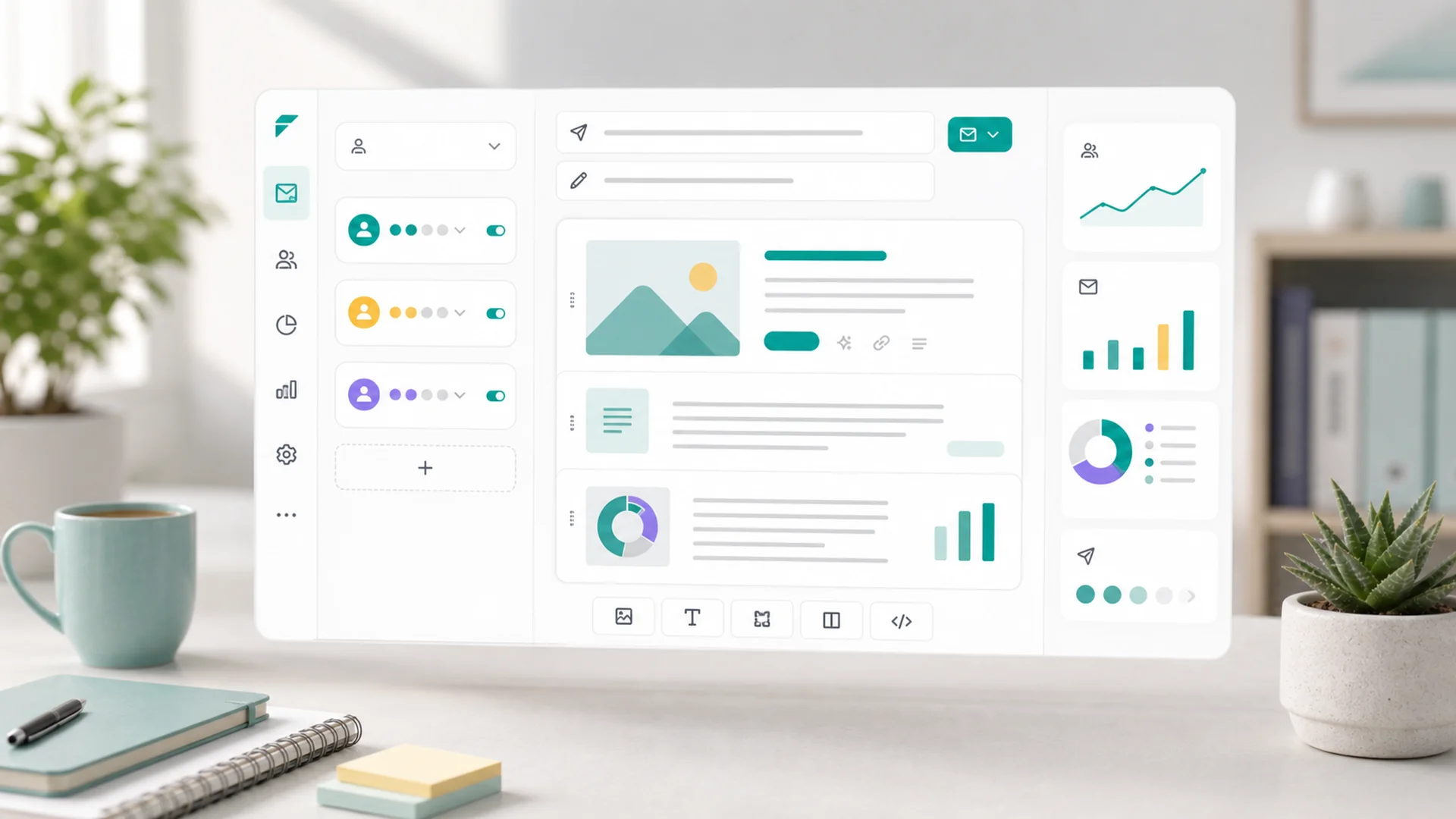
The newsletters that survive are the ones that got easy to produce. A reusable template with the same three or four sections every issue — the tip, the work, the dates, the one link — turns writing night from a design project into a fill-in: two hours becomes forty minutes, and the consistency reads as professionalism on the subscriber's side.
Use customer properties with fallbacks for personalization — "Hi Maria" with a graceful "Hi there" when the name's missing — and let AI draft each issue's sections from your notes while you do the judgment pass; the draft-and-approve loop fits newsletters perfectly.
After every send: read outcomes, not just opens
The post-send review reads two layers, in order:
- Delivery health first. Bounces, skips, and unsubscribes are the plumbing report — a spike there is a list or sender problem, and no subject line fixes plumbing. (The bounce-and-skip investigation tells you which kind.)
- Then business outcomes. Which link got clicked, who replied, what got booked. Opens are directional at best — clicks and replies are intent. The diagnostic split: low opens → subject lines and cadence; good opens but no clicks → contents not keeping the promise; clicks but no replies/bookings → the destination, not the newsletter.
And harvest the intent: readers who clicked the workshop link are an audience for the workshop's follow-up — the review screen lets you build that audience from the action, which is how a newsletter quietly becomes a pipeline instead of a broadcast. One change per issue, tested against the next send — the same one-action discipline as the weekly analytics ritual.
Key takeaways
- Write the one-line promise first and keep it every issue: promos live in their own sends, not the newsletter's cardigan.
- Subject lines front-load the issue's best item and tell the truth: preview text is the second pitch line; send from a person.
- Cadence by your worst week: the rhythm trains the open habit and the deliverability machines alike.
- Subscription groups offer "less" before readers take "nothing": and keep the newsletter honest by giving promos their own channel.
- Template the habit: a repeating structure turns writing night into a forty-minute fill-in.
- Review delivery health first, business outcomes second: change one thing per issue.
Frequently asked questions
What's a good open rate for a small business newsletter?
Healthy small lists with a kept promise commonly see 35–50% — far above industry averages, because the list actually asked for it. But benchmark against your own last six issues, not a chart: direction beats comparison, and opens are inflated by mail clients anyway. Clicks and replies are the honest numbers.
How long should a newsletter be?
As long as the promise requires and no longer — for most, a three-minute read. The discipline isn't a word count; it's cutting the section you wrote because it was due rather than because it was good.
Should I clean subscribers who never open?
Yes, on a schedule: after six months of silence, send a "still want these?" note, then move non-responders out of the active group. A smaller engaged list outperforms a padded one on every metric that matters — including the sender reputation that decides whether anyone sees issue twenty.
Can AI write my newsletter?
AI can assemble each issue from your raw material — the month's work, the customer questions, the dates — inside your template, in your voice. The promise, the judgment about what's actually the best item, and the final read stay yours. Draft cheap, approve carefully.
Weekly or monthly for a business like mine?
Start monthly unless your field produces genuinely new, useful material every week. You can always add frequency to a newsletter people love; recovering from a weekly that taught people to skip you is much harder. The worst-week rule decides, not ambition.
The template, the groups, the send, and the review all live in your Faster workspace, next to the customer records the clicks land on. Write the one-line promise today, build the template once, and let the rhythm do the compounding.