

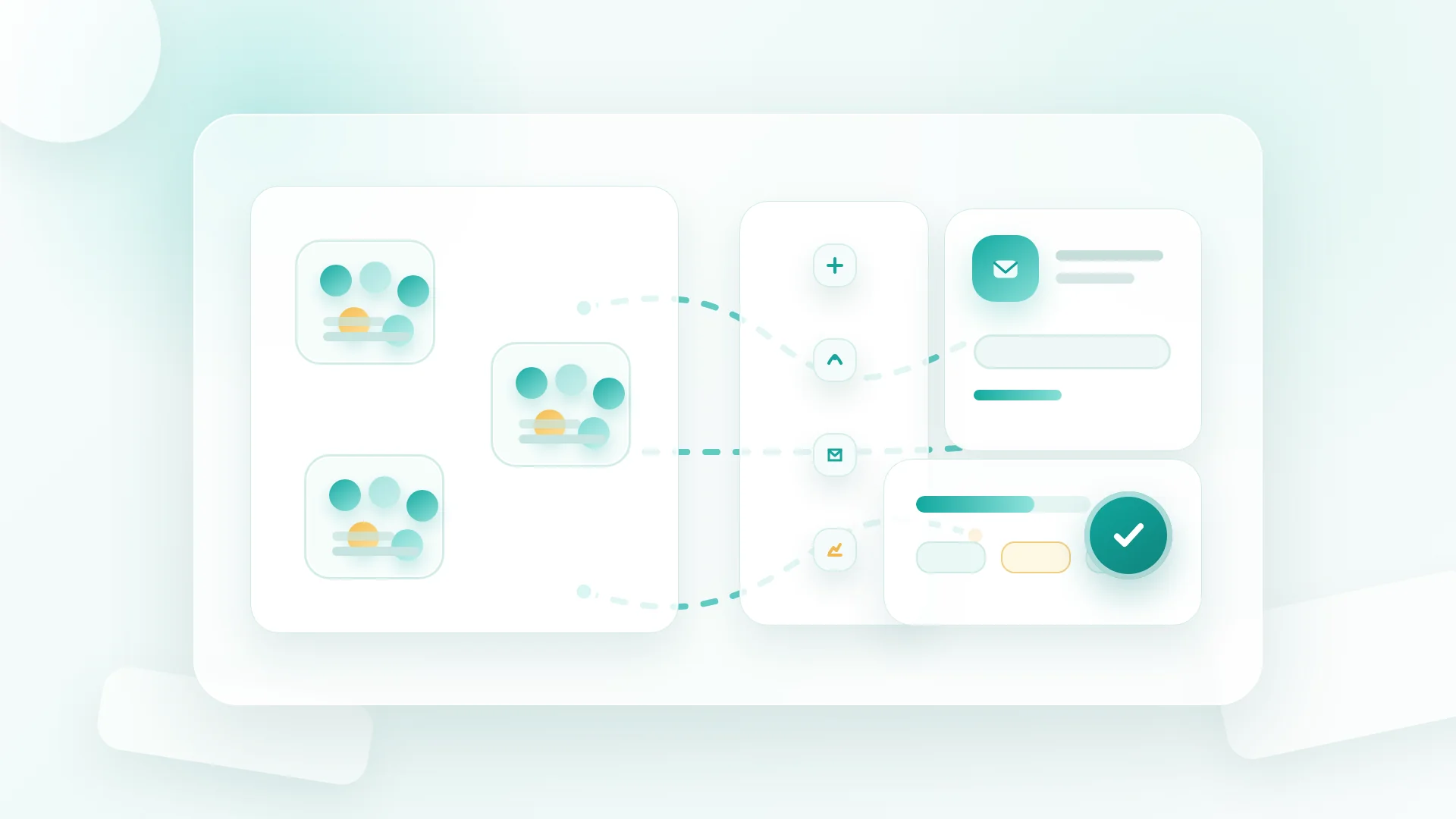
Segmentation for a small team is three self-updating audiences — customers vs prospects, engaged vs quiet, by interest — built on what people actually did rather than what you guess about them. Add the habit of previewing every audience before sending, and you'll send less email and make more money from it. No enterprise tooling required.
"Segmentation" sounds like something for companies with a marketing department and a data warehouse. Meanwhile the actual problem is small and familiar: you send one email to everyone, your best customers get treated like strangers, strangers get treated like customers, and a few more people unsubscribe each time. The fix costs an afternoon and runs itself afterward.
Why sending to everyone costs you money
Every irrelevant email spends two currencies: attention and trust. The customer who already bought your course doesn't need the launch pitch; the prospect comparing options doesn't care about your maintenance tips for existing clients. Send both to both and each learns your emails are usually skippable — so the email that finally was for them gets skipped too. The math of segmentation isn't about sending more precisely so you can send more. It's that relevance is what keeps the channel alive.
The starter set: three audiences, one afternoon
An audience is a saved rule, not a saved list — membership updates itself as people act. These three cover most of what a small business ever needs:
Customers vs prospects
has purchased / booked / paid an invoice → customer; everyone else → prospect
The single most valuable split. Prospects get education and offers; customers get value, updates, and reasons to come back. The moment someone buys, they move themselves — no list maintenance, ever.
Engaged vs quiet
opened or clicked in the last 60–90 days → engaged; otherwise → quiet
Engaged people can hear from you often. Quiet people get your best content only — or a win-back sequence — because hammering the disengaged is how sender reputations die.
By interest
which form, page, service, or product brought them in
The wedding-catering inquirer and the corporate-lunch buyer should not get the same email. Source and behavior tell you the interest — you never have to ask.
Behavior beats declared data
The instinct is to segment by profile fields — industry, size, role. Fields are fine, but they're what people said once; behavior is what they did lately, and it's already being recorded for you. Behavior-based segments qualify people by events: submitted the quote form this month, clicked the pricing link twice, booked but didn't rebook within 90 days, bought product X but never product Y. Each of those is a follow-up writing itself — and combined with one or two profile fields ("clicked pricing" AND "restaurant industry") they get surgical without getting complicated.
Fields are what people said once. Behavior is what they did lately.
When the two disagree, behavior is telling the truth.
Audiences and lists are different tools
One distinction saves a lot of mess. Audiences are rules — dynamic, self-updating, the right target for journeys and recurring sends. People lists are hand-curated for one-time outreach — the twelve customers you want to invite to a preview dinner, the lapsed accounts the team picked by hand. Use a list where human judgment chose the members; use an audience where a rule should keep choosing them. The failure mode is using a list for an ongoing purpose — it's stale by next month and nobody remembers why those forty people are on it.
Preview before every send
The cheapest insurance in email: before any broadcast or journey launch, preview the audience. Two checks, thirty seconds: does the count look sane (a "hot leads" audience of 4,000 means a broken filter; an "all customers" of 12 means one too), and do five sample members belong (spot the test account, the unsubscribed contact, the competitor who filled in your form). Most segmentation disasters are visible in the preview — they only become disasters because nobody looked. And underneath everything: unsubscribes and contact preferences override every segment, always — a perfectly targeted email to someone who opted out is still spam.
A worked month
What this looks like in practice for, say, a fitness studio: the newsletter goes to engaged only. A win-back offer goes to quiet customers who haven't booked in 60 days. The new strength-class announcement goes to people whose booking history says strength, not the yoga regulars. The preview dinner invite goes to a hand-picked list of twelve. Four sends, four different groups, zero spreadsheet work — and each group heard something that was actually for them. That's the whole discipline: fewer, truer emails, with the targeting done once and maintained by behavior.
Key takeaways
- Three audiences cover most businesses: customer/prospect, engaged/quiet, by interest.
- Rules, not lists, for anything ongoing — membership should maintain itself.
- Behavior over declared data: recent actions out-predict profile fields every time.
- Preview count + sample members before every send — thirty seconds that catches the disasters.
- Preferences trump segments: opt-outs override targeting, no exceptions.
Frequently asked questions
How many segments is too many?
If you can't say from memory what each audience is for, you have too many. Small teams thrive on three to six; beyond that, segments stop driving decisions and start being decoration. Add a new one only when a real send needs it.
My contact data is messy — segment first or clean first?
Segment first, on behavior — actions are recorded automatically and don't care about your messy fields. Behavior-based audiences work on day one; field cleanup can happen gradually, guided by which fields your segments actually turned out to need.
Does segmentation work with only 200 contacts?
That's where it works best, relatively — at 200 contacts every mis-aimed email lands on a person you might actually meet. The engaged/quiet split alone will change your open rates, and the customer/prospect split will change your tone. Scale benefits come later; relevance benefits come immediately.
Should segments drive automation too, or just broadcasts?
Both — audiences are the natural entry and exit rules for journeys: quiet customers enter the win-back, buyers exit the prospect nurture. The same three starter audiences power the sequences you've already built, which is the point: one set of definitions, used everywhere.
What's the first segment to build today?
Engaged vs quiet. It requires zero data entry, it immediately stops you from emailing people who've checked out, and the deliverability improvement lifts every send that follows. Customers vs prospects is the same afternoon if your sales flow through the platform.
Segmentation isn't a bigger email program — it's a smaller, sharper one. Three rules, a preview habit, and behavior doing the bookkeeping. Your list gets quieter inboxes; you get better numbers. Setup clicks are in the help center.